5th Boston Area Drosophila Meeting: June 16th 2021
The Whitehead Institute
Virtual Meeting due to the COVID-19 pandemic.
LOCAL ORGANIZERS:
Dr. Ruth Lehmann (Whitehead Institute, MIT)
Dr. Yukiko Yamashita (Whitehead Institute, MIT)
Lisa Bolduc (Whitehead Institute)
Donna Hicks (Whitehead Institute)
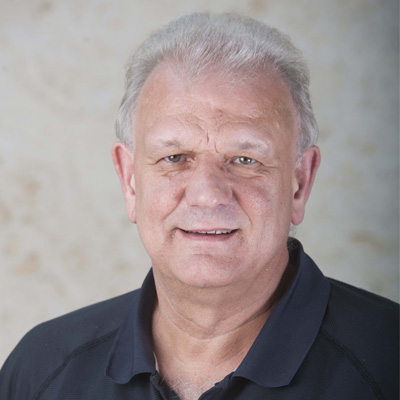
KEYNOTE SPEAKER:
Prof. Hugo J. Bellen
Investigator of the Howard Hughes Medical Institute, March of Dimes Professor in Developmental Biology and Charles Darwin Professor in Genetics at Baylor College of Medicine in the Departments of Molecular and Human Genetics, and Neuroscience, and the Neurological Research Institute at Texas Children’s Hospital.

To view a PDF version of the schedule, click here.
| 12:30– 1:55 pm | Session 1: Concurrent Sessions |
| A. Neurobiology | Moderator: Jens Rister (University of Massachusetts Boston) |
| 12:30 – 12:45 pm | Welcoming Remarks Ruth Lehmann (Whitehead Institute, Massachusetts Institute of Technology) |
| 12:45 – 1:00 | Kimberly Madhwani, O’Connor-Giles Lab (Brown University) Neurodevelopmental role of a tRNA regulator underlying intellectual disability |
| 1:00 – 1:15 | Paul Marcogliese, Bellen Lab (Baylor College of Medicine) Loss of IRF2BPL impairs neuronal maintenance through excess Wnt signaling |
| 1:15 – 1:30 | Chad Sauvola, Littleton Lab (Massachusetts Institute of Technology) Drosophila Tomosyn regulates tonic/phasic release differences and is required for presynaptic homeostatic potentiation Mohamed Adel, Griffith Lab (Brandeis University) Establishing an ex vivo model for aversive associative learning in fruit flies Sabrina Clemens, Olsen Lab (Harvard Medical School) A Drosophila model for validating gene-environment interactions in Parkinson’s disease |
| 1:30 – 1:45 | Ane Martin Anduaga, Kadener Lab (Brandeis University) Thermosensitive alternative splicing of timeless senses and mediates temperature adaptation in Drosophila |
| 1:45 – 1:55 | Torrey Mandigo, Walker Lab (Massachusetts General Hospital) Drosophila modeling of a human sleep/chronotype GWAS locus highlights a conserved role for the N-glycosylation pathway in the sleep-epilepsy axis Matthias Schlichting, Rosbash Lab (Brandeis University) Dopaminergic input to the Drosophila clock neuron network promotes sleep |
| B. Gametogenesis | Moderator: Vicki Losick (Boston College) |
| 12:30 – 12:45 | Welcoming Remarks Yukiko Yamashita (Whitehead Institute, Massachusetts Institute of Technology, Howard Hughes Medical Institute) |
| 12:45 – 1:00 | Jianjun Sun (University of Connecticut) A novel platform utilizing Drosophila ovulation for non-hormonal contraceptive screenings |
| 1:00 – 1:15 | Madhumala Sadanandappa, Bosco Lab (Darmouth College) Parasite-activated neuronal circuits trigger Drosophila germline modification |
| 1:15 – 1:30 | Ari Dehn, Losick Lab (Boston College) Modeling age-induced polyploidy in Drosophila Hammed Badmos, Cagan Lab (University of Glasgow) The role of SAGA components in cell migration and epithelial integrity Diane Lebo, McCall Lab (Boston University) Molecular regulation of clearance by nonprofessional phagocytes in the Drosophila ovary |
| 1:30 – 1:45 | Stacey Hanlon (University of Connecticut) Female meiotic drive of B chromosomes in D. melanogaster |
| 1:45 – 1:50 | Jiaxin Gong, Xiang Lab (UMass Medical School) Shear stress activation of TrpA1 underlies mechanical nociception in Drosophila Melanogaster |
2:00 – 3:00 pm Keynote Speaker Address
Prof. Hugo J. Bellen: Flies to study disease associated variants and pathogenic mechanisms
3:00 – 3:15 pm Break
3:15 – 4:00 pm Workshops
| Workshop 1 Genetic/Genomic Technologies Host: Norbert Perrimon, Harvard Medical School, Broad Institute | Workshop 2 Modeling Human Disease Host: Hugo Bellen (Baylor College of Medicine, Howard Hughes Medical Institute) | |
| 3:15 – 3:26 | Hongjie Li (Baylor College of Medicine) Update on the Fly Cell Atlas | China Byrns, Bonini lab, University of Pennsylvania Glial AP1 promotes early traumatic brain injury recovery but chronically drives tauopathy |
| 3:26 – 3:37 | Julie Agapite (Harvard University) What’s new at FlyBase | Sayantanee Paul, Veraksa Lab (University of Massachusetts Boston) ERK-mediated phosphorylation of Capicua, a key regulator of MAPK signaling in development and disease |
| 3:37 – 3:48 | Justin Bosch, Perrimon Lab (Harvard Medical School) Proximity labeling: Application to the fly blood secretome | Guang Lin, Bellen Lab (Baylor College of Medicine) Altered ceramide metabolism and endolysosomal pathway in the pathogenesis of INAD/PARK14 |
| 3:48 – 4:00 | Jun Xu, Perrimon Lab (Harvard Medical School) New Nanotag-Nanobody tools for in vivo studies | Liping Wang, Bellen Lab (Baylor College of Medicine) Glucosylceramide is generated by active neurons and transported to glia for lysosomal degradation by Glucosylceramidase (GBA) |
4:00 – 4:45 pm Round Table Discussions
| Career Trajectories in Drosophila Research | Toward Inclusive Diversity: Steps we can take in our labs, classrooms, and institutions |
| Hosts: Alexis Hill College of the Holy Cross How to find a position in academia Kristin White Mass. General Hospital, Harvard Medical School The pros and cons of a job in academia Susan Gerbi Brown University Defining your strengths and weaknesses, job shadowing and networking | Host: Michele Markstein Princeton University University of Massachusetts Amherst |
4:45 – 5:00 Break
5:00 – 6:00pm Session 2: Concurrent Sessions
| A. Morphogenesis | Moderator: Erica Larschan (Brown University) |
| 5:00 – 5:15 | Mukulika Ray, Larschan Lab (Brown University) Maternal pioneer factor CLAMP regulates sex-specific transcript diversity in early Drosophila embryos |
| 5:15 – 5:25 | Jacob Malin, Hatini Lab (Tufts University) Sidekick alternately interacts with contractile and protrusive effectors to control epithelial morphogenesis Mary Ann Collins, Martin Lab (Massachusetts Institute of Technology) Actin Interacting Protein 1 promotes tissue fusion via intercellular force transmission during Drosophila gastrulation |
| 5:25 – 5:40 | Kevin Cabrera, Wunderlich Lab (University of California, Irvine) Transcriptional mechanisms controlling immune priming in Drosophila melanogaster |
| 5:40 – 6:00 | Closing Remarks Ruth Lehmann (Whitehead Institute, Massachusetts Institute of Technology) |
| B. Transposable Elements | Moderator: Nelson Lau (Boston University School of Medicine) |
| 5:00 – 5:15 | Jonathan Nelson, Yamashita Lab (Whitehead Institute) The essential role of retrotransposons to maintain ribosomal DNA in the Drosophila male germline |
| 5:15 – 5:20 | Joyce Rigal, Marr Lab (Brandeis University) Increasing somatic transposon activity shortens D. melanogaster’s lifespan |
| 5:20 – 5:25 | Niraj Kumar Nirala (UMass Medical School) The Hinfp-Histone1 axis represses transposable elements to safeguard somatic genomes |
| 5:25-5:40 | Nick Rice, Theurkauf Lab (UMass Medical School) Heat Stress Disrupts piRNA Biogenesis Machinery |
| 5:40 – 6:00 | Closing Remarks Yukiko Yamashita (Whitehead Institute, Massachusetts Institute of Technology) |